
What Skipping This Costs You
Put off winter prep and the bill usually arrives at the worst moment: a torsion spring that finally gives out on a 42-degree morning when you're already running late, or a door that won't seal and lets cold, damp air pour into the garage overnight. A snapped spring repair is a same-day fix, but it's an unplanned one, and if it happens while the door is halfway open with a car underneath, that's a much bigger problem than a scheduled tune-up would have been. Worn weatherstripping left alone through winter also means higher energy use if your garage is attached to the house, plus an open invitation for pests looking for a warm, dry gap to squeeze through.
Why Winter Still Matters for a Florida Garage Door
Temple Terrace doesn't get snow or ice, but it does get something almost as hard on a garage door: swings. A humid, 85-degree afternoon can drop into the 40s by the next morning once a cold front pushes through, and that kind of daily temperature swing makes metal parts expand and contract repeatedly. After a long hurricane season of heat, humidity, and salt-tinged air pushing moisture into every seam, your door's hardware has already taken a beating. Winter's drier air is actually when a lot of those hidden issues show up, because wood and rubber that swelled all summer start to shrink back, and anything that was already stressed tends to fail once the weather cools.
Springs
Torsion and extension springs lose tension gradually with every cycle, and summer humidity accelerates rust on the coils, which weakens them faster than people expect. A spring that was already near the end of its life often doesn't fail during the heat — it fails the first cold, dry morning afterward when metal fatigue finally catches up. Listen for a loud bang from the garage (that's often a spring letting go) and watch for a door that feels heavier than usual when you lift it manually with the opener disengaged.
Weatherstripping and Seals
Check the rubber seal along the bottom of the door and the strips along the sides. Months of heat and humidity can make rubber go soft, swell, or start to crack. As the air dries out in cooler months, those same strips often shrink and pull away from the frame, leaving gaps you can see daylight through. Replacing a worn seal is inexpensive and takes an afternoon, and it keeps cooler, damp air and small pests out of the garage.
Rollers, Tracks, and Hinges
Salt air and humidity are rough on anything metal, especially if you're closer to the coast or your garage faces prevailing wind. Look for surface rust on rollers, hinges, and track bolts. A light coat of a garage-door-rated lubricant on rollers and hinges (not the track itself) before the drier months set in will cut down on grinding noise and slow further corrosion. If a roller is visibly pitted or a track section has bent slightly from storm winds earlier in the season, that's worth fixing now rather than waiting for it to bind up the door entirely.
Opener and Safety Sensors
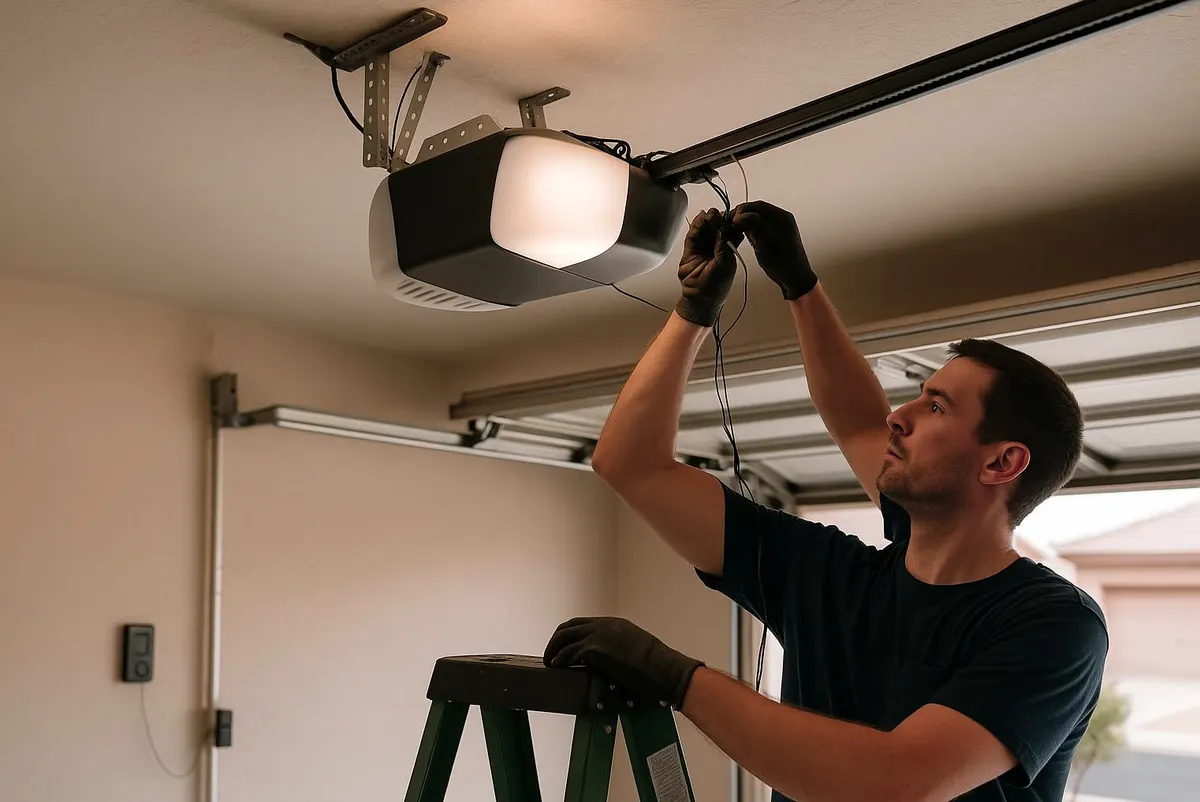
Humidity and condensation can creep into opener electronics and sensor housings over the summer. Wipe down the photo-eye sensors near the floor on each side of the door, make sure they're aligned, and test the auto-reverse function by placing a block of wood in the door's path. If the opener strains, reverses unpredictably, or the remote range has gotten shorter, that's usually a sign something inside needs attention before cooler weather adds more load to the motor.
Exterior Panels and Hardware
Give the door itself a once-over for rust spots, especially along the bottom panel where water pools after afternoon downpours. Surface rust caught early can be treated; left through another season of temperature swings, it spreads and weakens the panel.
A Simple Winter Checklist
- Test door balance by disconnecting the opener and lifting manually
- Lubricate rollers, hinges, and springs with a garage-door-specific lubricant
- Inspect and replace worn bottom and side weatherstripping
- Clean and align photo-eye safety sensors
- Check for rust on tracks, rollers, bolts, and panel edges
- Tighten loose hardware shaken by months of storm season vibration
When to Call Temple Terrace Overhead Door Co
If your door is noisy, uneven, slow to respond, or you spot rust creeping into the hardware, it's worth having it looked at before a cold snap turns a minor issue into a stuck or broken door. Our Preventive Maintenance service covers the full inspection above — balance, lubrication, hardware, and sensors — and if a spring is already showing wear, our Garage Door Spring Repair team can replace it safely the same day, without you having to find out the hard way how much tension a bad spring is still holding.
If you're in Temple Terrace, Tampa, or anywhere nearby and want your garage door squared away before the cooler months set in, call Temple Terrace Overhead Door Co today to schedule a visit.