
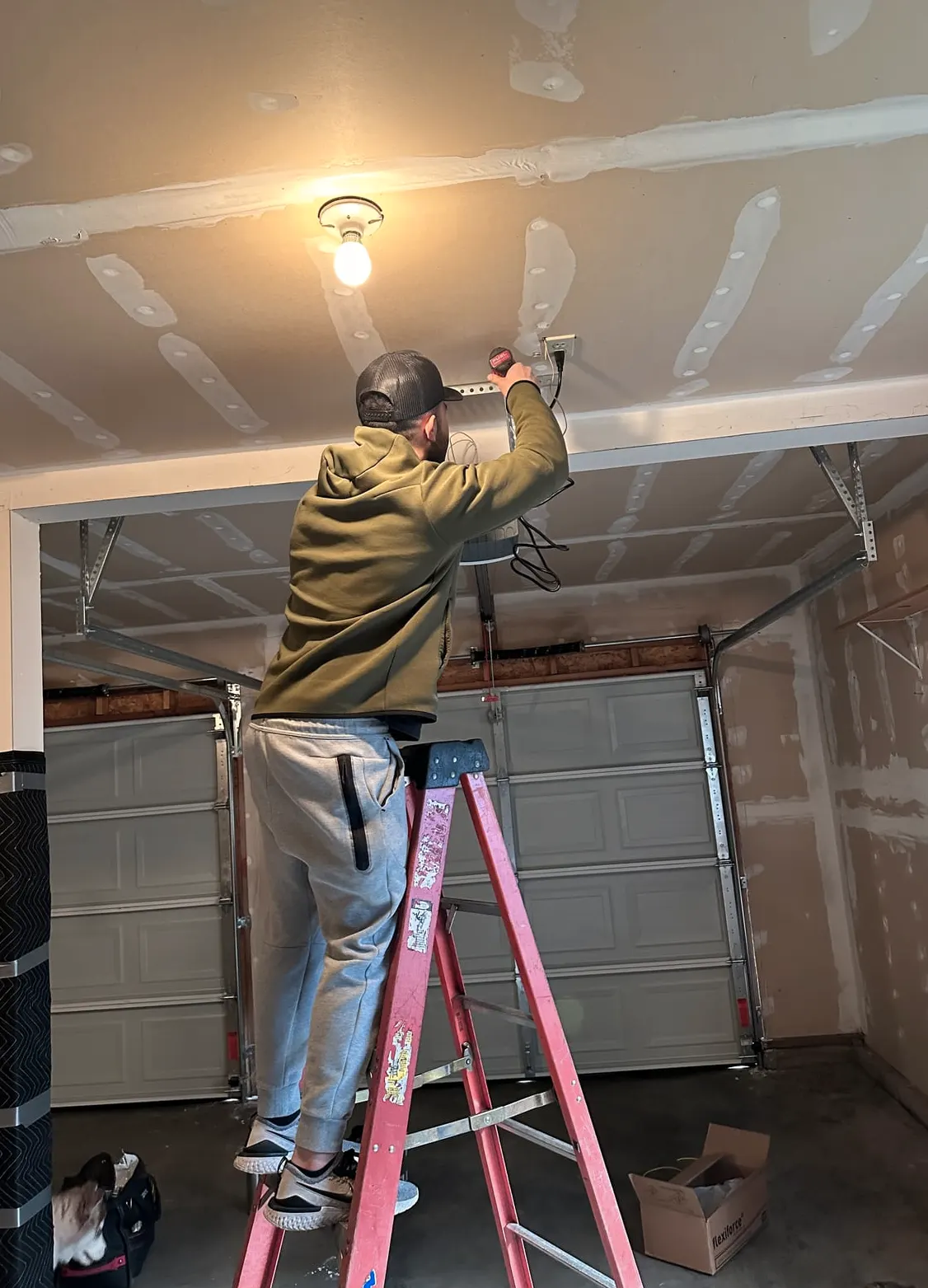
What a Technician Sees on This Call
The call usually starts the same way: "The door won't close all the way, so I just turned up the force until it would." One spouse did it last week during a storm, the door has been slamming or reversing ever since, and now there's a disagreement about whether to turn the dial back down or just live with it. By the time we get there, the opener is cranking out way more muscle than it should, the door is hitting the floor hard enough to flex the bottom panel, and the real problem — a dragging roller, a swollen weatherstrip, a track that's slightly out of alignment — never got fixed. The force setting just covered it up.
Travel Limits vs. Force: Two Different Dials, Two Different Jobs
Travel Limits
Travel limits tell the opener exactly where "fully open" and "fully closed" are. Set them right and the door stops at the correct spot every time. Set them wrong and the door either stops short (leaving a gap at the bottom, which lets in rain, bugs, and heat) or keeps pushing past where it should, straining the track and the top panel.
Force Settings
Force is how much push or pull the motor is allowed to use to get the door through that travel. It exists as a safety feature — if the door meets resistance (a bike, a pet, a person), the opener should sense it and reverse instead of continuing to push. The force dial is not meant to be a workaround for a door that's struggling to move.
Why Turning Up the Force Is the Wrong Fix
When a door is hard to close — dragging, catching, reversing for no obvious reason — the instinct is to give the motor more power so it "just pushes through." That works for a while, which is exactly the problem. The opener is now straining against whatever is actually wrong: a bent track, a roller that needs grease, cables that are fraying, or (very common here) a bottom panel that's swollen from humidity and binding against the frame. Keep that force setting high and you're asking the motor to fight that resistance every single cycle. Over weeks, that shows up as a cracked bottom panel, a stripped gear in the opener, bent hinges, or a header bracket starting to pull away from the frame. The safety reversal feature also becomes useless at high force, because by the time the opener senses enough resistance to reverse, it's already strong enough to have hurt someone or something.
Why This Matters More Here Than in Drier Climates
Temple Terrace homes deal with a lot of moisture swing through the year — humid stretches, heavy afternoon downpours, and the occasional swollen wood or composite panel that fits a little tighter in its track than it did in a dry spell. That tightness is often temporary and mild. The problem is when someone responds to it by cranking the force dial instead of addressing the binding directly. A door that's dragging slightly because of humidity needs lubrication, a track check, or a weatherstrip adjustment — not a stronger motor fighting it twice a day.
Signs Your Settings Are Off
- Door reverses right before touching the floor, even with nothing in the way
- Door slams down hard instead of settling gently
- Opener strains, groans, or hesitates partway through the cycle
- Door doesn't fully seal at the bottom, leaving a visible gap
- Door bounces back up a few inches after closing
A Safe Way to Check Force (Not Adjust It Yourself Blind)
The standard safety test: place a 2x4 or a roll of paper towels flat on the ground where the door closes. If the door doesn't reverse immediately on contact, the force is set too high and needs to come down — but if it's high because something else is making the door hard to move, lowering the number alone won't fix the underlying drag. That's the piece people miss.
When to Call Temple Terrace Overhead Door Co
If your door is reversing unexpectedly, slamming, or straining through its cycle, don't just chase it with the force dial. We'll check the opener's travel limit and force settings against the actual condition of the door — tracks, rollers, cables, and panel alignment — as part of a proper Preventive Maintenance visit, and correct whatever's causing the resistance in the first place, not just mask it.
Settle the argument the right way — call Temple Terrace Overhead Door Co and we'll tell you exactly what's going on, no guessing required.