
The Call That Starts With "I Pulled the Red Handle"
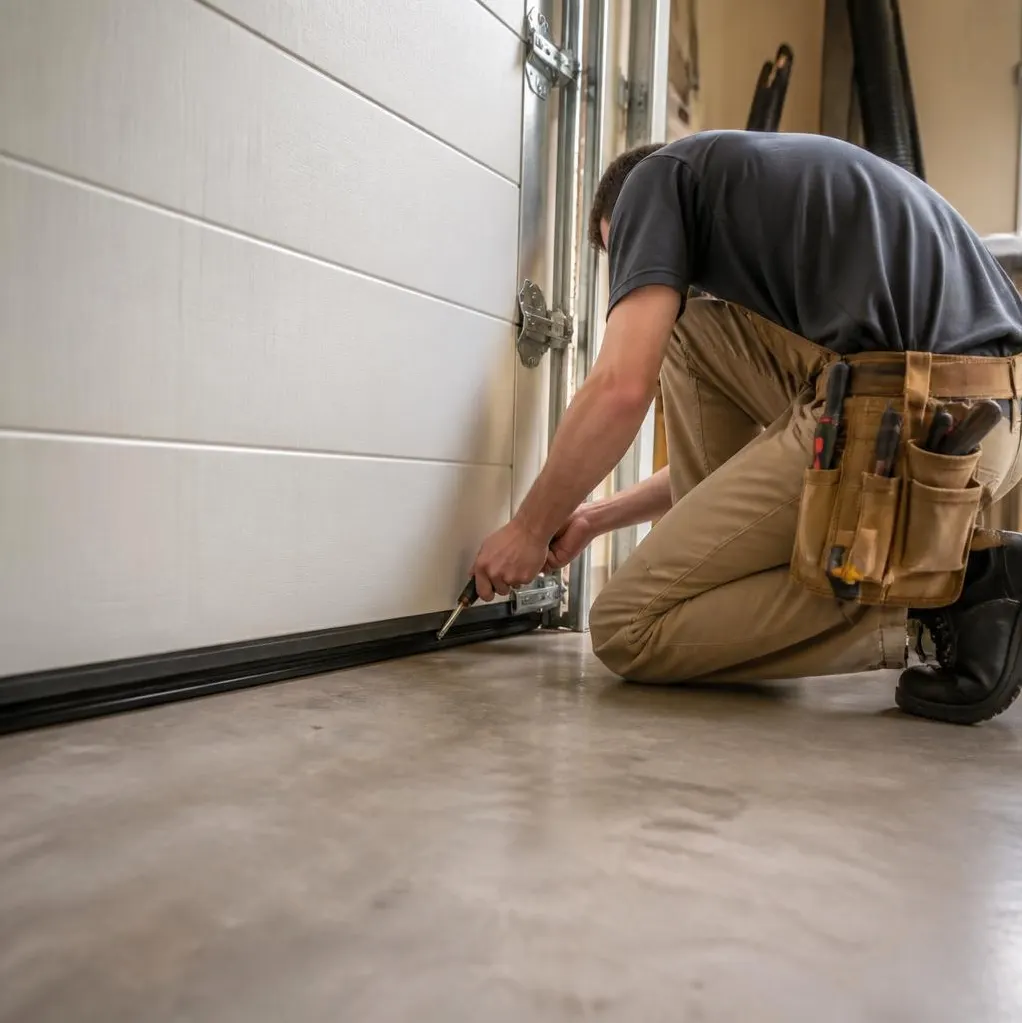
A technician shows up to a lot of calls in Temple Terrace that start the same way: the power went out during a storm, or the opener stopped responding, and the homeowner pulled the emergency release cord to get the car out. Sometimes that works fine. Other times the door is now sitting half-open, impossible to budge, or it dropped hard and jammed in the track. The cord did exactly what it was built to do — disconnect the door from the opener — but nobody warned them what happens next if a spring is already weak or the door is out of balance.
What the Cord Is Actually For
The emergency release is that dangling red handle attached to a lever on the trolley, the part that rides inside the opener's rail and connects to the door arm. Pulling it disconnects the door from the motor so you can lift and lower it by hand. It exists for one reason: so a power outage, dead opener, or electrical issue never traps your car inside or outside the garage. In a region where summer storms regularly knock out power for hours, that's a genuinely useful feature.
What Goes Wrong — and How Badly
The release cord doesn't disconnect the springs, only the opener. If the springs are already weak, rusted, or improperly tensioned — which happens faster here thanks to humidity and, closer to the bay, salt air — a manually operated door can behave unpredictably:
- Sudden drop: A door with a broken or fatigued spring has little to no counterbalance. Pulled off the opener, it can fall fast instead of lowering smoothly, which is a real risk to hands, feet, and anything underneath it.
- It won't budge: If the door is heavy (common with insulated or wind-rated doors built for storm codes) and the springs aren't doing their job, manual lifting can feel impossible or require far more force than it should.
- It jumps the track: Doors that have swollen slightly from moisture, or that already have a roller sitting slightly off-track, are more likely to bind or derail when operated by hand instead of by the opener's steady, guided pull.
- Reconnection problems: After manual operation, some homeowners struggle to re-engage the trolley correctly, leaving the opener physically connected but not actually gripping the door — so it looks fixed until the next time it's used.
When Pulling It Is the Right Move
- The power is out and you need to get a vehicle in or out.
- The opener has failed (dead motor, stripped gear, electrical fault) but the door itself moves smoothly and is properly balanced.
- You're doing a quick visual check of spring tension or balance with the door disconnected, and you already know how to do that safely.
When It Makes Things Worse
- After hearing a bang or seeing visible sag — that's usually a broken spring, and pulling the cord removes the opener's control without adding any safety back.
- When the door already feels heavy or crooked before you touch the cord. That imbalance doesn't go away in manual mode; it gets worse.
- During or right after heavy rain when panels may be swollen and tracks slightly misaligned — manual force in that situation is more likely to pop a roller than a smooth, motor-guided cycle.
The Actions That Actually Prevent Problems
- Test the door's balance twice a year: disconnect the opener, lift the door halfway by hand, and let go. It should stay put. If it drifts up or drops, the springs need attention before you ever rely on manual operation.
- Keep the release cord and handle accessible and clearly visible — in a dark garage during an outage, fumbling for it adds its own risk.
- After any storm with sustained high winds, do a visual check of springs, cables, and rollers before assuming manual operation will go smoothly.
- Know how to reconnect the trolley properly so the opener fully re-engages, not just appears to.
When to Call Temple Terrace Overhead Door Co
If your door is hard to lift by hand, drops instead of lowering smoothly, or came off balance after a storm, that's a job for Garage Door Spring Repair or Cable & Roller Replacement, not more manual lifting. We'll check tension, inspect for the rust and wear that Tampa-area humidity accelerates, and make sure the opener and release mechanism are working together the way they should.
If you're dealing with a stuck door, a disconnected opener, or you just want a balance check before the next system rolls through, call Temple Terrace Overhead Door Co — we serve Temple Terrace and the surrounding Tampa Bay area with same-day appointments.